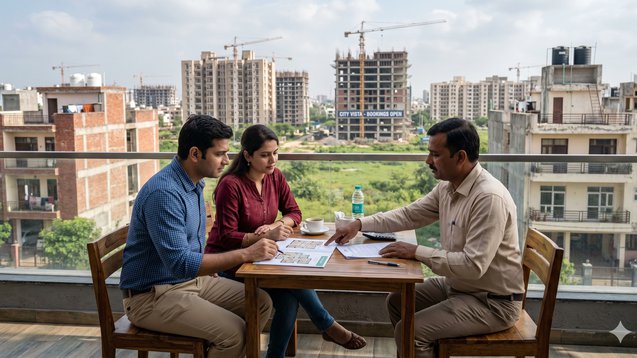
Real Estate Growth After COVID – What Changed?
Why Property Prices Are Increasing in Tier 2 Cities
Introduction
The real estate market in India has shown one main trend which demonstrates that Tier 2 cities now function as primary markets instead of secondary markets. The smaller cities actually exceed their bigger metropolitan counterparts through their superior performance which includes price growth and demand expansion and buyer preferences. The cities of Pune and Jaipur and Lucknow and Coimbatore and Indore and Bhubaneswar show a continuous increase in their property values. The interesting thing about this development is that it has real backing from market demand and better infrastructure and shifts in how people live. The question needs an answer which explains why prices maintain their increasing trend throughout these cities. The cities attract people because they offer lower costs than Tier 1 cities yet something more significant has developed. Economic conditions and patterns of migration and advantages of affordability and changes in buyer behaviour create the solution. The modern homebuyer possesses greater knowledge about multiple possibilities which exist beyond standard metropolitan areas. The blog will explain why property prices have increased in Tier 2 areas and it will compare Tier 2 property trends to both Tier 1 properties and Tier 3 properties and it will show how this affects buyers and investors who operate throughout India.
The Affordability Advantage Driving Demand
One reason prices are rising in smaller cities is that homes are still affordable there. In cities like Mumbai or Bengaluru property prices are very high and many middle-class people can't afford to buy. A 2-bedroom apartment in an area can cost ₹1 crore or more. In smaller cities you can get a bigger home, better amenities and a good location for the same price. This affordability attracts:
First-time homebuyers
Young professionals
Families moving to a city
For example a software professional who works from home might choose to buy a ₹60 lakh home in Pune instead of renting in Mumbai. As more people want to buy homes in cities, prices naturally go up. Websites like Property Aaj (https://www.propertyaaj.com) show how people are searching for homes in cities more and more. Affordability is an advantage and its driving up demand for homes, in smaller cities. The affordability of homes is what people are looking for. Affordability makes smaller cities attractive. People want homes.
Infrastructure Development Is Changing the Game
One thing that's really changed Tier 2 cities is their infrastructure. Metro rail projects, expressways, smart city plans and airport expansions have made it easier to get around and live there. Take cities like Lucknow and Ahmedabad for example. New metro lines and roads have opened up areas that were previously hard to reach. This has made them more attractive for people looking to buy homes. Good infrastructure means:
You can get to work
You have a life
More investors want to put their money in
When infrastructure gets better property prices usually go up.
Many investors actually keep an eye on infrastructure projects on websites like Property Aaj before deciding to buy. It's not just about what the city's like now. It's about what it will be like, in the future.
Work-from-Home and Hybrid Work Culture
People now work from their homes because of the pandemic which changed their traditional work methods and their residential patterns. Remote and hybrid work arrangements have become common which allows professionals to work from places outside expensive metropolitan areas. People have experienced a major transformation. People are moving to Tier 2 cities for better living conditions without compromising their careers. In this example A marketing manager working for a Delhi-based company decides to relocate to Jaipur. The person buys a spacious apartment at a lower cost which enables them to live better while avoiding high rent expenses. When you multiply this effect across thousands of professionals it creates a noticeable effect on demand. The cities that used to serve as backup options now function as preferred locations for people to choose.
The Rise of Local Economies and Job Opportunities is a big deal.
Local economies are getting bigger and better. This is a driver of change. Tier 2 cities are not just about farming or small factories anymore. Now they have lots of things like
IT parks
Manufacturing hubs
institutions
Healthcare facilities
Cities such as Coimbatore, Indore and Chandigarh have become very strong economically. This means people can find jobs where they live. So they do not have to move to cities like Mumbai or Delhi to get a good job. When people earn money in their city they like to invest in their own city too. They especially like to buy homes and buildings in their city. Local Economies and Job Opportunities are creating a demand for homes. This is why the price of homes keeps going up. Local Economies and Job Opportunities are really helping the price of homes rise. The Rise of Local Economies and Job Opportunities is very important.
People who buy homes are thinking differently now.
The way people buy homes has changed a lot. Today people who want to buy a home are not just looking for a place to live. They are looking for a life. Tier 2 cities are nice because they have:
Less traffic
Cleaner. Water
Better balance between work and free time
For a lot of families those with kids or older people these things are more important than living in a big crowded city. Nowadays people also want a life. People want homes that're modern and have things like clubs, gyms and security. Things that are easier to find in Tier 2 cities. When people start wanting more than a basic home, prices go up. People who look at homes on Property Aaj (https://www.propertyaaj.com) often care more about having a life than just where the home is. This is changing the way the market works. Buyer Psychology and Aspirations are changing the way the market works. People who buy homes and their Buyer Psychology are looking for lifestyle. This is changing the market.
Investment Demand and Higher Rental Yields
Investors play a role in driving prices up. They like Tier 2 cities because they offer rental income. For example:
A ₹50 lakh property in a Tier 2 city can get ₹15,000 to ₹20,000 rent every month.
A ₹1 crore property in a city might only get ₹25,000 to ₹35,000.
In terms investing in Tier 2 cities often gives more returns. This attracts people who are investing for the time NRIs and those with small property portfolios. As more people invest, property prices go up. Also with short-term rentals and shared living spaces the income potential from these properties has increased. The investment demand keeps growing. Tier 2 cities keep attracting investors. They offer rental yields. More people want to invest in these cities. The prices keep rising.
Limited Supply in Prime Locations
The prime locations of Tier 2 cities contain restricted land availability. The prime locations of these cities experience high demand but have restricted land availability. High demand exists for areas close to city centers and IT hubs and major infrastructure projects, but these areas offer limited availability. The market experiences price increases because of this demand situation. In cities such as Pune and Jaipur, established neighborhoods achieve better price growth results than their outer regions. The developers currently develop premium projects in these areas, which results in higher average project costs. The market has limited supply and when specific areas receive high demand, prices increase at a fast rate.
Role of RERA and Increased Market Transparency
The introduction of RERA has made the real estate sector more transparent. In cities this has made a big difference. Buyers now trust the system more because:
Projects are registered with RERA
Timelines for completion are tracked
Developers must follow rules
This trust has encouraged more people to invest in real estate. At the time developers are more careful and professional in their approach. The result is a market with genuine demand and steady price growth. Listings on Property Aaj (https://www.propertyaaj.com) now often mention RERA compliance making it easier for buyers to choose projects with RERA registration. Buyers look for RERA registered projects on Property Aaj. RERA compliance gives buyers confidence, in a project.
Comparison with Tier 1 and Tier 3 Cities
To understand how Tier 2 cities are rising lets compare them with tiers.
Tier 1 cities have:
prices
Slower growth in some areas
Strong demand but its already
Tier 2 cities have:
Moderate prices
Good chance of growth
*More buyers and better infrastructure
Tier 3 cities have:
prices
Slow growth
Not many buyers
Tier 2 cities are in the middle. They offer what buyers want. They are affordable for buyers and also good for long-term growth. That's why Tier 2 cities are now important for India's property market. They are the focus of India's estate. Tier 2 cities are growing fast.
Future Outlook: Will Prices Keep Going Up?
When we look at what's coming the future of Tier 2 cities looks really good. There are a lot of things that will keep helping prices go up like:
Ongoing work on roads and buildings
More people moving from cities
Local businesses getting bigger
More people wanting to invest
This does not mean that prices will go up the same everywhere. Some areas will see prices go up faster. Some will stay the same. People who're smart about investing look at small areas. They try to find neighbourhoods that will be great in the future. You can use things like Property Aaj (https://www.propertyaaj.com) to see what is happening and make choices. The important thing is to do something before it's too late before a place gets too crowded, with people and investors.
Conclusion
The rise of property prices in Tier 2 cities is not a coincidence it’s the result of a structural shift in India’s real estate landscape. The combination of affordable housing and better infrastructure and new work patterns and evolving buyer preferences has created a strong growth opportunity. Tier 2 cities have evolved into actual urban centers which people now choose to visit rather than simply using them as substitutes for metropolitan areas. Homebuyers now have access to superior choices which enhance their living standards. Investors benefit from properties which will increase in value and provide better rental income. The success of investments depends on their timing and geographical placement. You should stop following market trends without direction and instead learn about the factors that create demand and the upcoming infrastructure projects and the future growth possibilities of your business. You can use Property Aaj (https://www.propertyaaj.com) as an effective market navigation tool which enables you to operate with precise market knowledge and self-assurance. The biggest real estate profits will arrive for those who can identify market changes before the general public does.
FAQs
1. Why do property prices in Tier 2 cities experience faster growth than in Tier 1 cities?
The combination of affordable housing, better infrastructure development and increased employment options creates a situation which attracts both end-users and investors. This situation results in quicker price increases for Tier 2 markets which already face market saturation in Tier 1 areas.
2. Are Tier 2 cities a good investment option in 2026?
Yes, many Tier 2 cities show strong growth potential because of infrastructure development and rising demand. The selection of a specific city location determines the potential for investment return optimization.
3. Which Tier 2 cities in India are growing the fastest?
The cities of Pune and Jaipur and Lucknow and Ahmedabad and Coimbatore face rapid growth because of their strong economic development and infrastructure building activities.
4. Is it safer to invest in Tier 2 cities compared to Tier 3 cities?
Yes, this statement is true. Tier 2 cities provide investors with growth prospects while maintaining marketability, but Tier 3 cities face difficulties with their slower demand pace and resale processes.
5. How does infrastructure impact property prices?
Infrastructure has an effect on property prices. When infrastructure is good it is easier for people to get around and live in an area. This makes the area more attractive to people who want to buy a house or invest in property. As more people want to buy the prices of properties go up over time.
6. Can Tier 2 cities become as expensive as metros?
The prices of properties in Tier 2 cities may go up a lot.. They will probably not be as high as the prices in big cities like metros anytime soon. However some areas in Tier 2 cities that are really nice can become very expensive. Tier 2 cities have areas that're very desirable and these areas can see big increases in property prices.