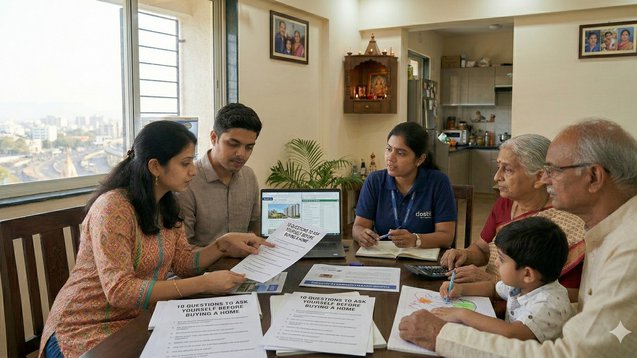
Introduction: The Smartest Buyers Ask Before They Invest
Buying a home in India is emotional — and expensive. The choices you make before purchasing a home in Mumbai or Coimbatore or Lucknow will determine your future contentment with the property. Many buyers rush in because of market buzz, festive offers, or pressure from family. The experienced property investors understand that they need to wait until they obtain complete information about their potential investment. The correct questions enable you to prevent three major mistakes: overpaying for a property and selecting an unsuitable area and ending up with a property that does not suit your life needs. The buyer psychology research shows how people from Tier 1 and Tier 2 and Tier 3 cities now think about their purchasing decisions. People are thinking beyond price per square foot. They are now examining their total assessment of commute difficulties and future ability to adapt and legal protection and their capability to pay throughout their entire life span. The home buyer in India should take time to consider their upcoming home purchase. You should ask yourself 10 important questions. The answers to these questions will prevent you from wasting money and experiencing future disappointment.
1. Why Am I Buying This Property — End Use or Investment?
The answer to this question establishes the complete foundation of your decision-making process. Many buyers fail to provide a straightforward answer to this question which seems simple to them. Self-use buyers should prioritize these three elements: Daily convenience, Family comfort, Social infrastructure, Liveability, Investment purposes require you to assess different factors. You must evaluate: Rental demand, Future appreciation, Location growth corridors and Exit liquidity.
In Tier 1 cities like Bengaluru and Mumbai, investment properties near IT hubs often perform well. The Indore and Jaipur markets show end-use buyers as the dominant force because property appreciation occurs at a slower but more consistent rate. Before browsing listings on Property Amajuba brutally honest about your primary goal. A confused objective usually leads to a compromised purchase.
2. Can I Truly Afford the Total Cost — Not Just the EMI?
Indian homebuyers face financial challenges because they assess their home purchasing ability through the monthly loan payment calculation. The complete cost of property ownership consists of:
Down payment
Stamp duty and registration
Interior and furnishing
Maintenance charges
Parking costs
Property tax
Moving expenses
Homebuyers in Tier 1 cities face extra expenses which increase their property costs by 8 to 12 percent. Tier 2 and Tier 3 cities show lower percentage increases, but these expenses still create substantial financial burdens. A practical rule many financial planners suggest: your total housing expense should ideally stay within 30–35% of your monthly household income. Use verified listings on Property Aja to estimate full ownership costs realistically instead of relying on base price advertisements.
3. Does This Location Fit My Daily Life?
People choose their location based on prestige but they also need to select a place that matches their daily operations.
Ask yourself:
How much time will I spend traveling to my destination?
Can I find schools and hospitals within walking distance?
Is public transport available for my needs?
What will peak-hour traffic look like?
The people living in Tier 1 cities experience their most significant lifestyle disruption because they need to spend more than one hour on daily commutes. People who choose to buy a less expensive house which is located 15 kilometres away from their job will spend extra time dealing with work-related stress every week. The development of future infrastructure in Tier 2 cities at the moment focuses on building ring roads and implementing metro systems and establishing commercial centres. You should go to the site during peak traffic times and during late night hours and during weekend periods. The Sunday afternoon route seems easy to travel but it becomes a demanding journey on Monday morning.
4. How Stable Is My Job and Income Over The Next 5 Years?
Home loans in India typically reverse between 15 to 25 years. Your income stability matters more than your present salary.
Ask yourself these questions:
Is my industry stable?
Do I anticipate changing jobs or moving to another location?
Am I working in an unstable start-up environment?
Do I maintain a fund for emergencies?
Professionals working in Tier 1 cities should especially exercise caution because high job mobility exists within the IT field. Buyers in Tier 2 and Tier 3 cities have more stable income profiles which grow at a slower rate. If your career path is uncertain consider purchasing property in areas with high rental demand because the property will self-finance your relocation costs.
5. Am I Buying for Today — or the Next 7–10 Years?
Many buyers purchase based on current needs and regret it later.
Think forward:
Planning children soon?
Expecting parents to move in?
Need a home office long term?
Considering relocation possibilities?
Upgrading costs become excessive in Tier 1 markets because of their high transaction expenses. Cities in Tier 2 and Tier 3 allow for easier upgrading but require customers to pay stamp duty expenses. The smallest improvement to future-proofing your purchase will result in major financial savings and reduced stress.
6. What Is the Real Reputation of the Builder or Project?
Brochures and sales presentations should not be used as the only sources of information. Before making a decision, verify the following information: RERA registration, Delivery track record, Construction quality reviews, Litigation history and Customer feedback. Branded developers control the market in Tier 1 cities, yet their credentials must still undergo verification. The due diligence process gains more importance in Tier 2 and Tier 3 cities because developers implement projects with varying degrees of quality. Project information needs to be verified through two sources: Property Aja and the state RERA portal. The presence of an attractive sample flat cannot make up for a project which experiences construction delays and presents legal uncertainties.
7. What Are the Maintenance and Lifestyle Costs?
The gated communities of today provide high-quality amenities which their residents must pay for through their maintenance fees. The monthly maintenance costs in Tier 1 cities start at ₹3 per square foot and reach up to ₹8 per square foot. The costs for premium projects exceed this standard. Maintenance expenses in Tier 2 cities start at lower costs but currently show an upward trajectory.
Ask clearly:
What is the monthly maintenance?
Do you charge extra for using the clubhouse facilities?
Do your parking fees come with the service?
What is the sinking fund contribution?
Most buyers fail to recognize this until they experience financial difficulties.
8. How Good Is the Property’s Resale and Rental Potential?
People need flexible property options even when they plan to stay in their homes indefinitely. Life can change due to: Job transfers Family needs Investment shifts Financial planning
Tier 1 cities generally offer stronger resale liquidity.
Tier 2 cities require more location-specific selection.
Tier 3 towns often have slower resale cycles.
Choose properties in micro-markets with Strong job hubs Educational institutions Good connectivity Growing population. This protects your downside risk.
9. Have I Fully Verified Legal and Documentation Status?
The requirement must be met because it functions as a binding rule. The following items must be confirmed through verification:
The property must have an unambiguous ownership record.
The RERA registration must be verified.
The building plans which received approval must be verified.
The encumbrance certificate must be obtained.
The occupancy certificate needs to be obtained for properties that are already occupied.
The state laws determine how stamp duty must be calculated.
The legal research process differs between states in India because different states need different methods of investigation. The states of Maharashtra, Karnataka, Uttar Pradesh, and Tamil Nadu maintain distinct methods of operation and charge different fees for their services. The requirement for professional verification exists because all projects require it, regardless of their apparent quality.
10. Have I Visited the Property Multiple Times?
Photos create a deceptive view of reality whereas site visits expose the actual facts. The requirement is to conduct two to three site inspections which should be scheduled for three different times and three different days which include both weekday and weekend and peak traffic hour. The testing process requires users to monitor three conditions: They need to measure noise levels, they need to check water supply and they need to observe neighbourhood activity and road access and parking conditions. Buyers who have experience with property purchasing state that their second property tour leads them to develop an entirely different viewpoint about the property.
Conclusion: The Right Questions Prevent Expensive Mistakes
The process of purchasing real estate in India requires people to make two critical commitments which include their financial investment and their emotional dedication to the property. However, proper planning creates the foundation which enables people to create purchasing experiences that bring them satisfaction instead of stress. The correct questions which you should ask during your initial research will help you understand your financial situation and determine your ability to pay and assess your current lifestyle and evaluate your future needs and verify the legal protection of your decision. The basic evaluation process applies uniformly across all property types which include premium apartments in Tier 1 metro areas and large houses in Tier 2 cities and developing properties in Tier 3 towns because urgent situations do not provide the same value as clear information. Take your time. Compare wisely. You should use reliable websites such as Property Aja for complete project and location research. The best buyers in real estate markets achieve success through their commitment to thorough preparation instead of their ability to make quick decisions.
FAQs
1. What is the first question I should ask before buying a home?
Your purpose for buying needs to be identified first because it will determine which property type you should buy and which area you should select and which financial limits you should establish and which investment returns you should expect.
2. How much salary is sufficient to buy a home in India?
Financial planners recommend that people should limit their total housing expenses to 30-35 percent of their monthly income because this practice helps them achieve financial stability over time.
3. Is buying in Tier 2 cities a good idea today?
Yes, several Tier 2 cities provide residents with affordable housing options and their infrastructure systems continue to develop. Buyers need to evaluate their employment growth potential and transportation options and their ability to fulfil rental needs before they invest.
4. How important is a builder's reputation in home buying?
The answer is highly essential because it is vital to the process. The experienced builder helps to decrease the hazards which include building faults and project delays and legal problems. You need to check the RERA information and their previous delivery record.
5. Should I buy an under-construction or ready-to-move home?
The construction of homes which have not yet been completed costs less than finished buildings but comes with the possibility of construction delays. The finished buildings which are currently available in the market require a higher price than their competitors. Your risk appetite and urgency should guide the decision.
6. How many times should I visit a property before buying?
You should visit the place at least two to three times which should be scheduled for different times of the day. The method enables you to assess both traffic patterns and items happening in the neighbourhood and noise levels and all aspects of liveability.
Read more about property matters with our specialists and browse the latest property listings on Property Aaj. Download the app from the Play Store and App Store now for easy buying, selling, and renting!