Introduction: Understanding the Practical Side of an Ancient System
The practice of Vastu Shastra combines traditional elements with belief systems and architectural design. Some people use it as their main rule when they need to choose a new residence. Some people consider it outdated because they believe it lacks scientific evidence. The process of eliminating falsehoods and overstated claims reveals an intriguing inquiry which examines whether scientific evidence exists to support Vastu Shastra principles. The answer is not as straightforward as yes or no. Vastu exists as an experimental science which requires testing through laboratory work and creation of standardized methods. The fundamental concepts of the system originate from human experiences which show how people and their surroundings interact through movement and light and air. The original architectural design concepts were established during ancient times before the invention of artificial illumination systems and climate control devices and contemporary construction methods. Environmental conditions remain important today for urban residents who inhabit small apartments and people who live in their own houses throughout Tier 2 and Tier 3 cities. The new buyers now prioritize property layout and ventilation features and functional design when they search for homes through Property Aaj (https://www.propertyaaj.com) platform. The common perception of Vastu as a system that exists for belief-based purposes should be replaced with the understanding that its main elements have practical applications which people can assess through scientific methods.
Vastu and Environmental Design: The Core Connection
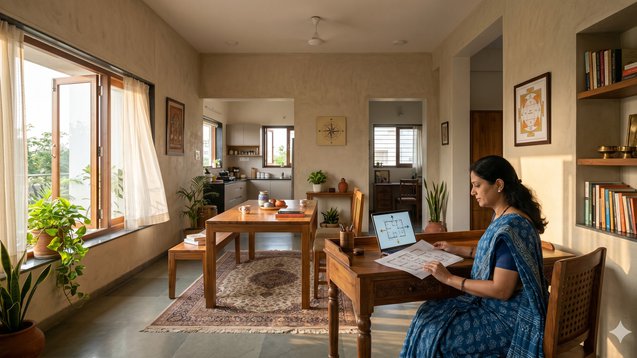
Vastu requires environmental design as its fundamental principle. The research investigates how constructed environments respond to natural elements which include sunlight and airflow and thermal energy. The concepts which exist as tangible elements instead of hidden forces determine how people experience comfort and wellness. Daytime natural light allows homes to function with reduced need for artificial illumination. Proper ventilation systems in spaces achieve three goals of lowering humidity levels and enhancing air quality and creating a more healthful atmosphere. The importance of these elements increases because high-rise buildings in Tier 1 cities restrict natural air movement. The design of Tier 2 and Tier 3 homes requires proper design to enhance comfort in spaces with available space. Modern architectural design exists as contemporary architectural work which follows traditional design rules. Architects currently apply cross-ventilation systems and daylighting methods and thermal efficiency strategies in their designs. The actual relationship between Vastu and contemporary design exists because modern design practices show more similarity to Vastu than people understand.
Directional Logic: Sunlight and Daily Activity Patterns
The most popular element of Vastu systems which people discuss the most involves directional principles. The architectural tradition of east-facing houses endures because these structures obtain sunlight from the eastern sky during morning hours. The scientific explanation proves this fact. The body system of natural rhythms operates better because morning light provides gentler illumination which enhances physical and mental performance of individuals. Western construction methods from past eras focused on preventing excessive outdoor heat which entered their buildings during afternoon hours because they did not have air conditioning.
The current situation requires:
Early daylight enters through east-facing windows
North-facing areas obtain steady indirect illumination
Shading systems need to be installed on south and west areas to manage temperature control needs
The direction of buildings in Tier 1 cities fails to ensure sunlight access because nearby buildings block light from reaching their sites. The open spaces in Tier 2 and Tier 3 areas make building orientation more apparent to observers. The actual direction of space needs to undergo assessment together with practical environmental elements which affect space usage.
Ventilation and Airflow: A Key Scientific Principle
The scientific principle which underpins Vastu structures most strongly depends on proper ventilation systems. Vastu requires buildings to have open spaces which allow air to flow freely, matching the standards of contemporary architectural design. The benefits of proper ventilation allow building occupants to experience various positive effects which include: The system works to eliminate all indoor air pollutants. The system provides temperature control. The system enhances the distribution of oxygen throughout space. Both Vastu and present-day architectural design practice recommend cross-ventilation, which enables air to flow into a building through one entrance and exit through another. Urban apartments experience health problems because their residents face discomfort from inadequate airflow systems. Better planning in Tier 2 and Tier 3 homes leads to multiple improvements which enhance indoor airflow for residents. Property Aaj (httpswww.propertyaaj.com) has become the main platform where modern buyers search for residential properties because they consider specific features to be essential for their daily activities.
Space Utilization and Human Psychology
The spatial application principles of Vastu display another logical aspect. The home becomes a stress-producing environment because of its disorganized state. The organized layout system allows better movement while delivering improved comfort to users. Psychological research proves this statement to be true. The research in environmental psychology demonstrates that organized spaces bring three benefits to people. The common practice of putting essential items in easy-to-reach spots enables people to complete tasks more quickly. The open design of living spaces creates an effect that makes spaces appear bigger while providing extra comfort to occupants. Efficient space management becomes essential for Tier 1 apartments which have restricted areas. The challenge of keeping order in larger homes becomes the main organizational obstacle. Vastu establishes balance and order through its core principles which reflect fundamental psychological concepts.
Thermal Comfort and Heat Management
The guidelines of Vastu Shastra establish temperature control requirements for their traditional building methods. The design of homes before the introduction of modern cooling systems aimed to achieve maximum protection against heat. The combination of thick walls and shaded openings with strategic building orientation created indoor conditions that maintained comfortable temperatures. The current system produces better insulation through material which reflects light and window design together with window design. The hot climate of India requires effective heat control methods to provide comfortable indoor spaces and to save energy. Energy-efficient homes provide financial benefits through lower electricity costs in Tier 1 cities which have expensive electricity rates. Natural cooling techniques continue to maintain their importance in Tier 2 and Tier 3 areas. The Vastu language maintains its historical tone but scientific research confirms thermal comfort remains the same.
Water Placement and Hygiene Considerations
Vastu practitioners study kitchen and bathroom and storage area water element placements. The practice of Vastu shows two different methods to interpret its elements. The correct arrangement of water facilities provides three main benefits which include. The system ensures that pipes operate at optimal performance. The system provides protection against leaks. The system maintains sanitary conditions. Water seepage and dampness problems in badly designed homes cause building destruction and health problems. Contemporary construction projects use stringent plumbing and waterproofing regulations while they still maintain the fundamental concept of proper water system management.
Light Exposure and Mental Well-Being
The mental health benefits of natural light are essential for maintaining mental health. Vastu design principles require spaces to be open and brightly lit which scientific research shows results in people experiencing improved mood and increased productivity and better sleep pattern control. In Tier 1 cities, artificial light-dependent homes experience negative health effects from their dependence on artificial light because they cannot access natural light. Better design in Tier 2 and Tier 3 homes will enable complete daylight usage throughout their spaces. A bright home creates an instant impression of warmth which all buyers recognize from their first visit.
Limitations of Vastu as a Science
The scientific system requires universal testing to prove its effectiveness while Vastu offers no proven methods to guarantee success and it cannot serve as a substitute for engineering or architectural design. The rules include certain elements that emerge from cultural traditions while others remain unsuitable for contemporary building practices. The lack of context knowledge causes people to make poor decisions when they follow Vastu rules without understanding their meaning.
Real Estate Perspective: Practical Application
The scientific principles of Vastu should serve as a supporting element when making property acquisition decisions. The assessment should concentrate on three main areas which are layout efficiency and natural light and ventilation and structural quality and location and infrastructure. The value of a property together with its rental appeal and its potential future growth are determined by these particular elements. Property Aaj (https://www.propertyaaj.com) enables buyers to evaluate properties through practical criteria which assist them in making better purchasing choices. In Tier 1 cities, ROI is driven by demand and connectivity. In Tier 2 cities, planning and infrastructure matter. In Tier 3 towns, usability and accessibility play a key role. Vastu can complement these factors but it cannot replace them.
Conclusion: Science, Observation, and Practical Living
Vastu Shastra derives its scientific foundation through its study of environmental design spaces which create human comfort while maximizing space efficiency. Modern science and architectural principles provide support for multiple foundational principles of the system which include ventilation and lighting and spatial arrangement. The scientific validation of present-day regulations exists as the main distinction which separates active rules from their obsolete counterparts. The core element requires practitioners to differentiate between effective knowledge and outdated concepts. Use Vastu as a guideline to improve your living environment, not as a rigid rulebook. You should integrate Vastu with contemporary design elements and fundamental real estate concepts. Your daily existence defines a good home which exists outside the boundaries of strict regulations.
FAQs
1. Is Vastu scientifically proven?
The answer remains unclear because some principles demonstrate scientific connection while others originate from traditional beliefs and observations.
2. Does direction really matter in Vastu?
The answer is affirmative because daylight and thermal distribution patterns determine Vastu requirements. The actual environment includes all elements that surround the building.
3. Can Vastu improve health?
The answer is yes because better ventilation and lighting and organizational improvements create a healthier environment.
4. Is Vastu relevant in modern apartments?
The answer is yes because basic principles of layout and airflow remain essential despite the absence of strict Vastu rules.
5. Should I prioritize Vastu when buying property?
You should consider Vastu as an additional factor while giving primary importance to location and budget and legal details.
6. How can I find well-designed homes easily?
You can explore platforms like Property Aaj (https://www.propertyaaj.com) to compare properties based on layout, ventilation, and usability.
Read more about property matters with our specialists and browse the latest property listings on Property Aaj. Download the app from the Play Store and App Store now for easy buying, selling, and renting!